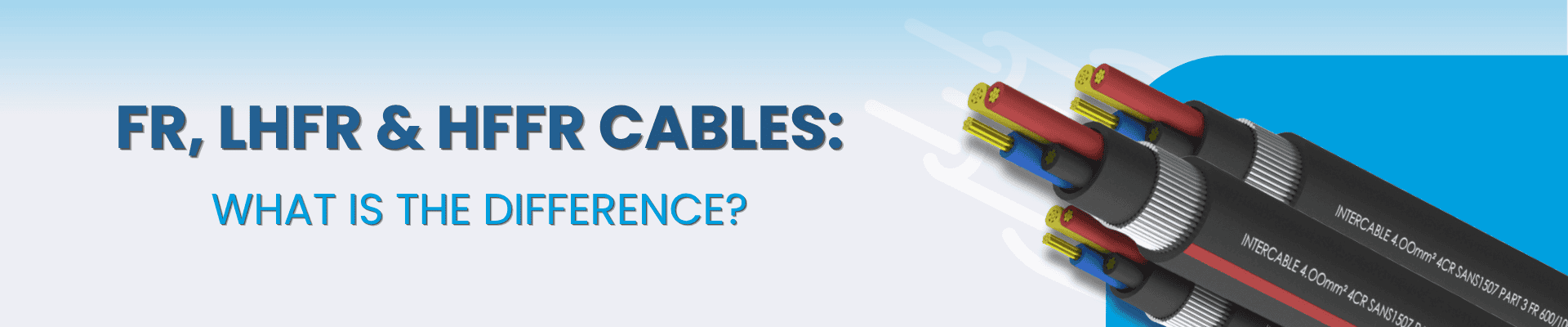
Fire performance is one of the most important considerations in industrial cable selection, but it is also an area where similar abbreviations can create confusion.
FR, LHFR and HFFR cables are all associated with behaviour under fire conditions. However, the terms do not describe exactly the same performance characteristics, and they should not be treated as interchangeable.
For engineers, contractors and procurement teams, understanding the distinction helps ensure that the selected cable aligns with the project specification, installation environment and required test performance.
Fire Performance Is Not One Requirement
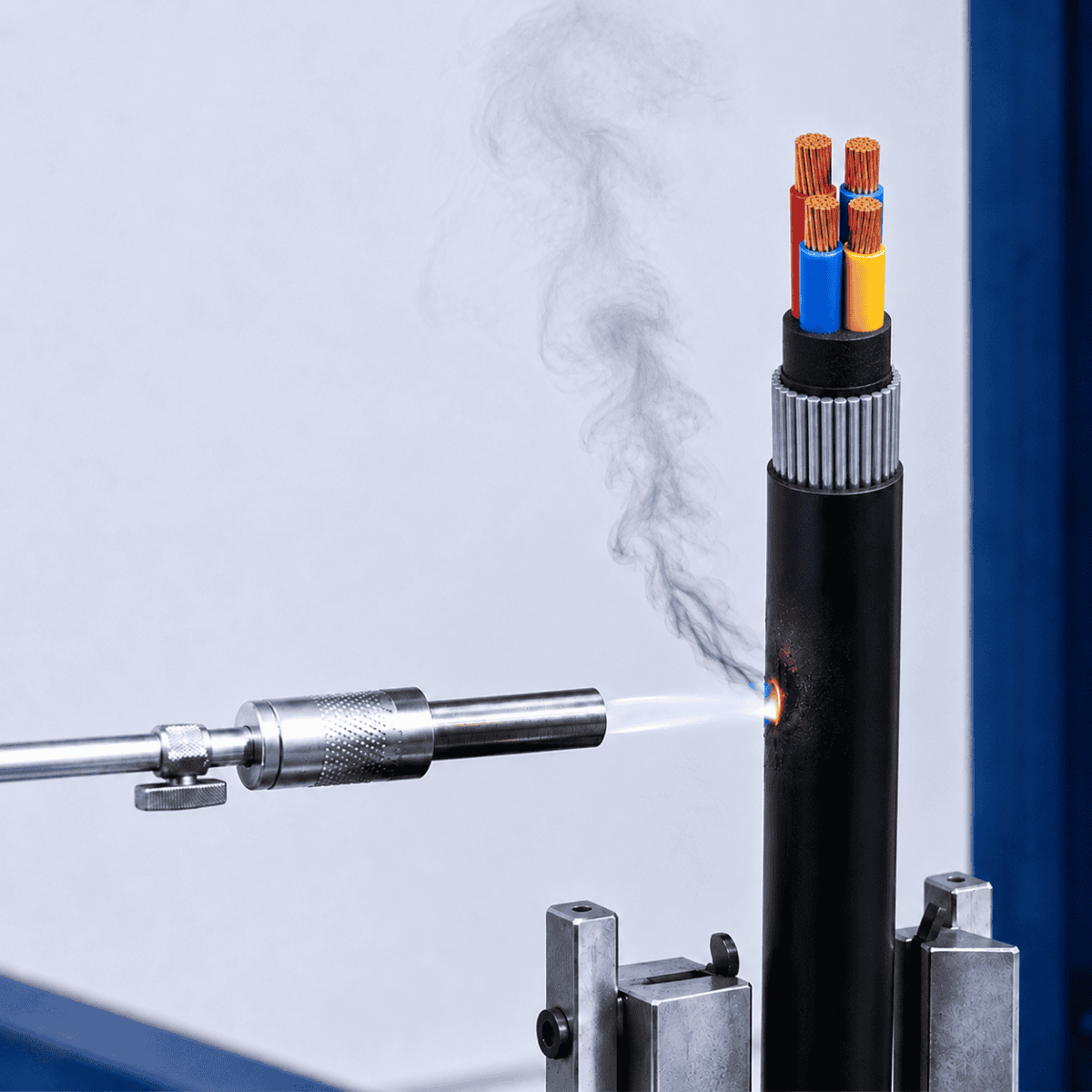
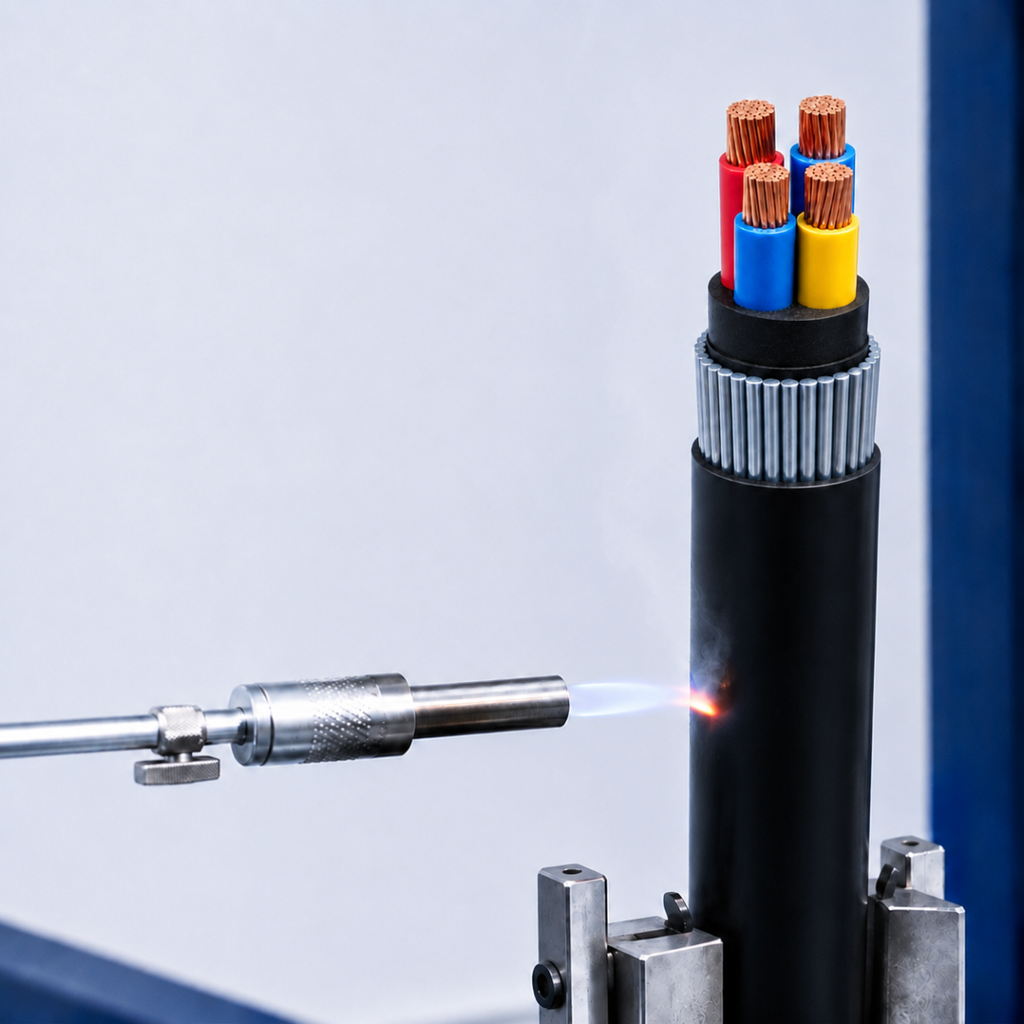
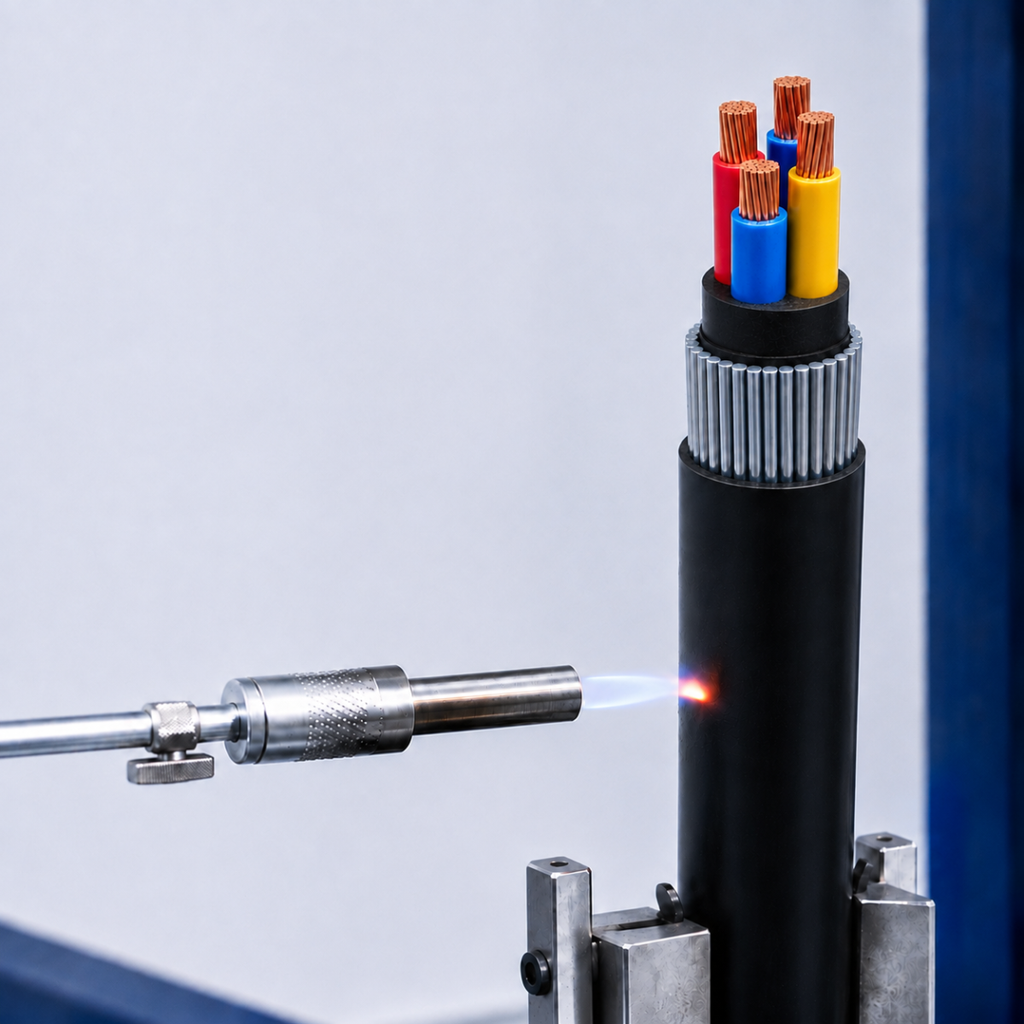
A cable’s behaviour in a fire can be assessed in several different ways. Depending on the project, the important question may be whether the cable limits flame spread, how much smoke its materials produce, whether corrosive halogen gases are released, or whether a circuit must continue operating for a defined period.
These are separate characteristics. A cable that performs well in one area should not automatically be assumed to meet every other fire-related requirement.
That is why a specification should identify the required tests and performance criteria rather than relying only on a short product label.
What Does FR Mean?
HFFR generally refers to halogen-free, flame-retardant cable construction. These cables use materials formulated without halogenated compounds while also being designed to limit flame spread under defined conditions.
HFFR constructions are often considered for locations where smoke visibility and corrosive fire gases are significant design concerns, such as enclosed public spaces, transport infrastructure, control rooms or facilities containing sensitive equipment.
Flame Retardant Is Not the Same as Fire Resistant
This distinction is critical. Flame-retardant performance generally addresses the cable’s contribution to flame spread. Fire-resistant or circuit-integrity performance addresses whether an electrical circuit continues to function for a specified time under defined fire conditions.
A flame-retardant cable should therefore not be substituted for a fire-resistant cable where continued circuit operation is required for emergency systems or other critical services.
What Should Be Checked Before Specifying?
Before selecting an FR, LHFR or HFFR cable, the project team should confirm:
- The applicable cable and fire-test standards
- Whether the requirement concerns a single cable or bunched cables
- The required flame-spread performance
- Any halogen acid gas limits
- Any smoke-density or visibility requirements
- Whether circuit integrity during fire is required
- The installation environment and mechanical-protection requirements
- The documentation and test evidence required at handover
International test families commonly used for these characteristics include IEC 60332 for flame propagation, IEC 60754 for gases evolved during combustion and IEC 61034 for smoke density. The exact part, edition and acceptance requirement must still be confirmed for the project.
Choose Against the Specification, Not the Abbreviation
FR, LHFR and HFFR labels are useful starting points, but they do not replace a complete cable specification. Two products carrying a similar description may have different constructions, test evidence or intended applications.
The more reliable approach is to start with the installation risk and required performance, then confirm the cable construction and supporting documentation against those requirements.
Intercable manufactures steel-wire-armoured FR, LHFR and HFFR power cables across a range of conductor sizes and core configurations. Contact the Intercable team to discuss the appropriate construction and documentation for your project requirements.