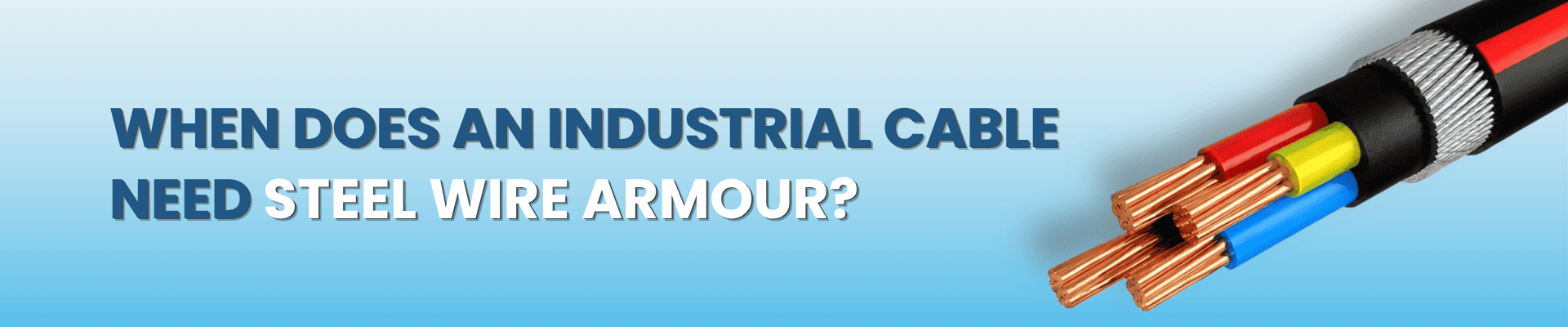
Not every industrial cable needs armour. But where a cable route is exposed to physical damage, choosing an unarmoured construction without suitable protection can create unnecessary risk.
Steel wire armour, commonly abbreviated as SWA, adds a layer of mechanical protection around a cable’s insulated cores and bedding. It is widely used in fixed industrial installations, but it should still be selected as part of the complete cable system rather than as a default feature.
The right decision depends on where the cable will be installed, what could damage it and how it will be terminated.
What Steel Wire Armour Is Designed to Do
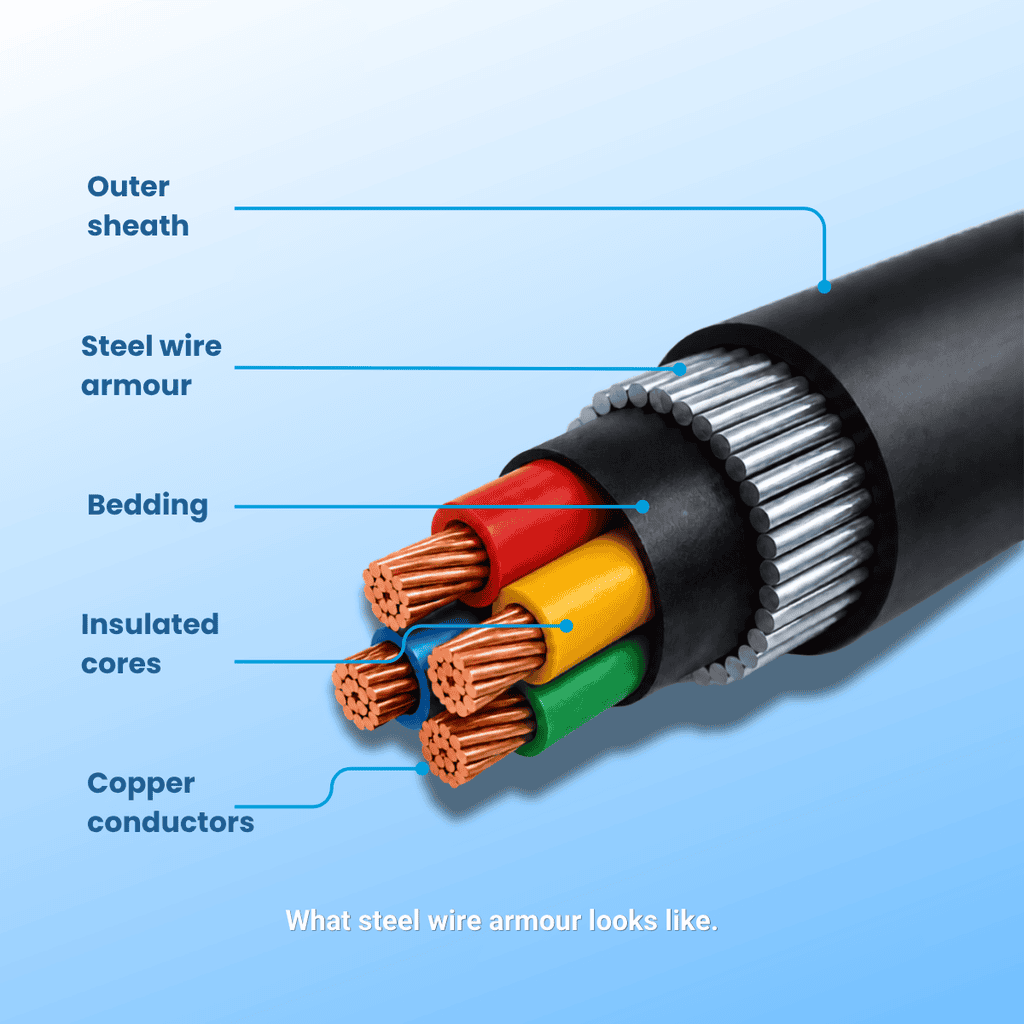
In a typical multi-core SWA cable, galvanised steel wires are applied around the bedding beneath the outer sheath. This layer helps protect the cable against mechanical stresses that could otherwise damage the insulation or conductors.
Depending on the cable design and installation, armour can improve resistance to impacts, crushing forces and accidental physical damage. It may also contribute to the earthing arrangement when the complete installation has been correctly designed and terminated.
Armour does not make a cable indestructible. The cable must still be handled, installed, supported and protected within its specified limits.
Situations Where SWA May Be Appropriate
Steel wire armouring is often considered when a fixed cable route is exposed to a credible mechanical risk. Examples can include:
- Industrial plant areas where equipment, tools or materials could strike the cable
- Outdoor routes exposed to site activity or accidental damage
- Underground installations, subject to the applicable installation design and local requirements
- Plant rooms and service areas containing heavy machinery
- Cable routes where additional mechanical protection is specified
- Power and control circuits serving demanding industrial equipment
These examples do not automatically make SWA mandatory. A project engineer must assess the route, regulations, environmental conditions and any alternative protection, such as conduit, ducting or enclosed cable containment.
When Armour May Not Be Necessary
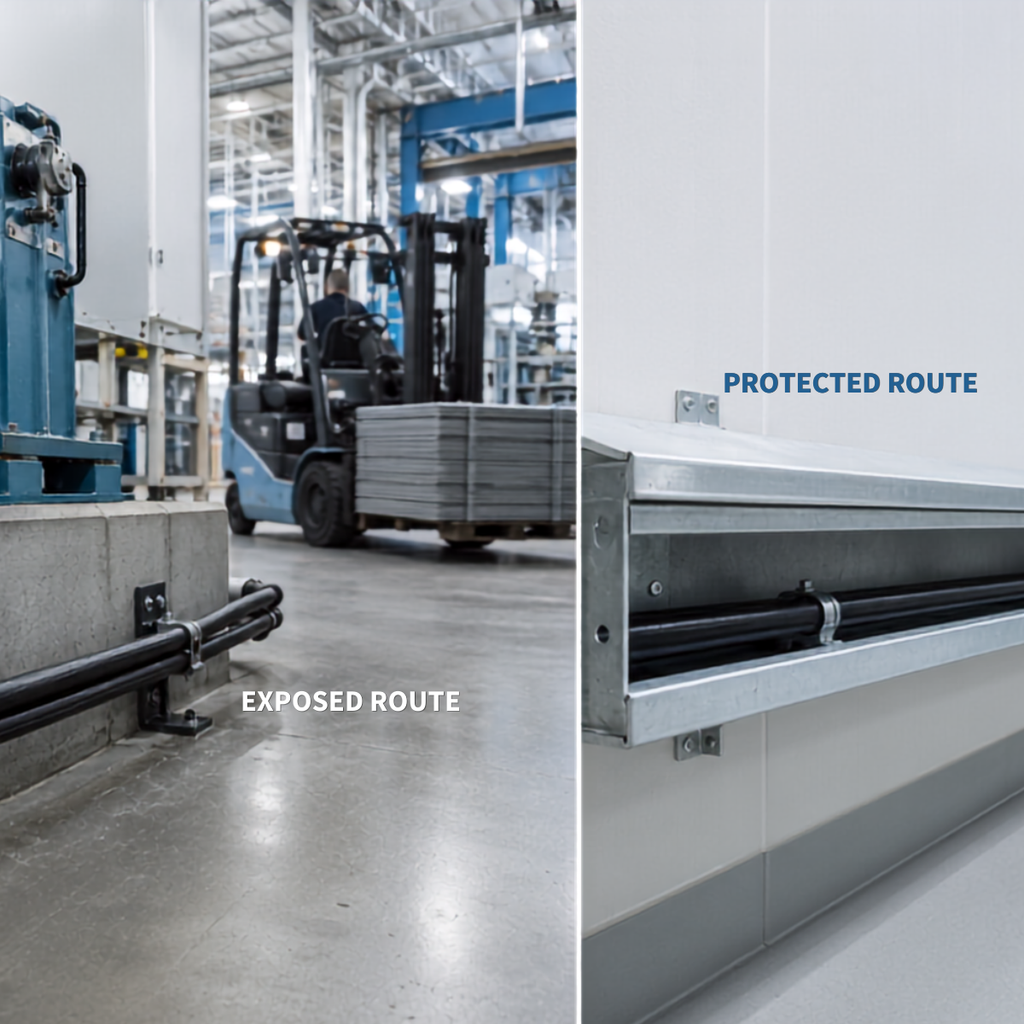
An unarmoured cable may be suitable when it is installed in a protected location and the containment system provides the required mechanical protection. Examples may include secure panels, protected indoor trays or conduits where the cable is not exposed to impact or crushing.
Avoiding unnecessary armour can simplify routing and termination. However, removing armour purely to reduce purchase price is not a sound decision if the installation still presents a meaningful risk of damage.
Armour Does Not Solve Every Environmental Risk
Mechanical protection is only one part of cable selection. An SWA cable must still be suitable for the temperature, moisture, chemicals, ultraviolet exposure and fire-performance requirements of the installation.
The outer sheath and insulation materials remain critical. If a cable is exposed to aggressive chemicals, water ingress, high temperatures or sunlight, the complete cable construction must be evaluated for those conditions.
Armouring should therefore not be treated as a shortcut for environmental suitability
Correct Glanding and Termination Matter
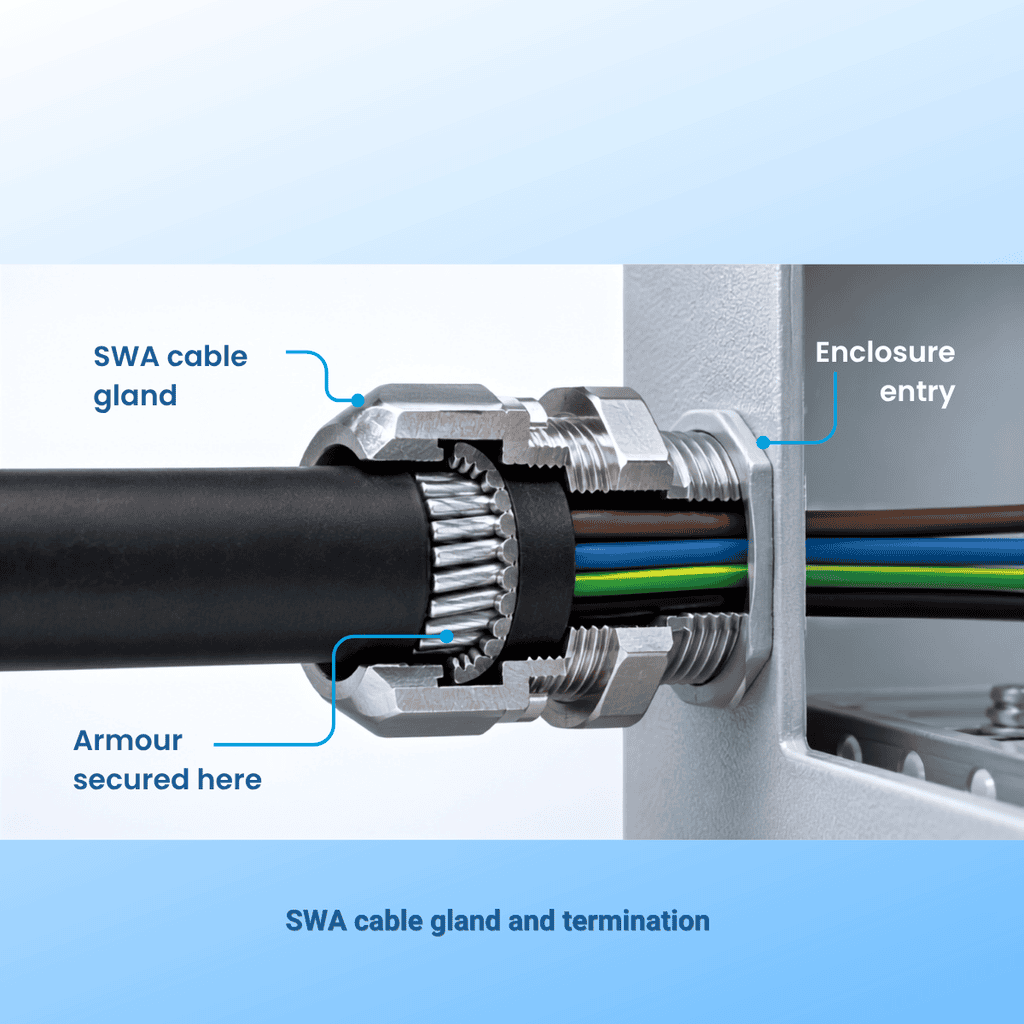
An armoured cable only performs as intended when it is installed correctly. The gland must suit the cable construction, cable diameter, equipment entry and environmental protection requirement.
Incorrect gland selection or poor termination can compromise mechanical retention, ingress protection and electrical continuity. The design must also address earthing and bonding in accordance with the applicable regulations and project requirements.
Installers should use the manufacturer’s cable data and follow the approved installation method rather than relying on nominal cable descriptions alone.
Other Specification Questions Still Apply
Before specifying an armoured industrial cable, confirm:
- Voltage rating and conductor size
- Number of cores and any spare-core requirement
- Current-carrying capacity and installation conditions
- Short-circuit and fault requirements
- Minimum bending radius and pulling limitations
- Sheath, insulation and fire-performance requirements
- Cable-gland compatibility
- Earthing and bonding design
- Required standards, test documents and project approvals
For single-core alternating-current circuits, the armour material requires particular engineering attention because steel is magnetic. The selected cable construction and installation arrangement must be confirmed by a competent electrical designer.
Start With the Risk Along the Cable Route
The most useful question is not simply, ‘Should this cable be armoured?’ It is, ‘What could damage this cable between its source and its destination, and how will that risk be controlled?’
That question allows the project team to compare cable armour, containment, routing and installation controls as one system. It also helps procurement teams avoid both under-specification and unnecessary cost.
Intercable manufactures steel-wire-armoured FR, LHFR and HFFR power cables in multiple conductor sizes and core configurations. Contact the Intercable team to discuss the cable construction most appropriate for your installation and project specification.